


The Must Sees of Florence Architecture
Millions of visitors flock to Florence each year to admire the stunning architecture found throughout the city. Florence is home to remarkable examples of Romanesque, Gothic, Renaissance, and Baroque architecture, making it one of the world's most significant architectural destinations.

However, many tourists overlook some of Florence’s most impressive architectural masterpieces. While everyone knows the Ponte Vecchio, the Cathedral of Santa Maria del Fiore (more commonly known as the Duomo), and the Palazzo Vecchio, these landmarks are often crowded with large tour groups and can offer only a surface-level glimpse of Florence. In some cases, they may even be a bit overrated compared to the city's lesser-known treasures.
Here are some of Florence’s hidden architectural gems, along with a few popular attractions you may want to skip, from someone who used to call the city home.
You Can Skip the inside of the Duomo

One of my biggest recommendations for visitors to Florence is to skip the interior of Santa Maria del Fiore, better known as the Duomo. While its stunning Italian Gothic and Renaissance exterior, clad in striking polychrome marble, is an absolute must-see and impossible to miss, the interior is often underwhelming for many visitors.
The cathedral’s simplicity was intentional. Early Florentines valued mathematical harmony, structural proportion, and pure Gothic forms over lavish decoration. As a result, the interior is relatively dark and contains less artwork than many visitors expect. When compared to Florence’s other historic churches, it can feel somewhat disappointing.

Adding to this is the fact that the lines to enter the cathedral are almost always extremely long, often
requiring visitors to wait several hours. During my time living in Florence, I walked past the Duomo multiple times each day, and there was almost always a line wrapping around the building.
In my opinion, there are several other churches in Florence that are far more deserving of your time and offer a richer architectural and artistic experience.
Medici Chapels and San Lorenzo

Unlike the interior of the Duomo, the Medici Chapels are absolutely breathtaking and remain one of Florence’s best-kept secrets. The common Florence visitor has never even heard of them, despite being home to some of the city's most spectacular Renaissance art and architecture.

Built between the 16th and 17th centuries as an extension of the Basilica of San Lorenzo, the Medici Chapels served as the official burial place of the powerful Medici family, who resided nearby in the Palazzo Medici Riccardi. Today, the chapels house priceless works of Renaissance art and serve as the mausoleum of one of the most influential families in European history.
The highlight is the Chapel of the Princes, a magnificent octagonal mausoleum crowned by a towering 59-meter dome. Its walls are covered in intricate inlays of semi-precious stones and richly colored marbles, creating one of the most lavish interiors in all of Florence. The chapel serves as the final resting place of six Medici Grand Dukes and stands as a testament to the family's immense wealth and influence.
Located within the San Lorenzo complex, the Medici Chapels offer a far more memorable and awe-inspiring experience than many of Florence’s more crowded attractions.

While the exterior of the San Lorenzo facade has remained unfinished, it offers a glimpse as to what the exterior of the Duomo looked like for nearly 600 years. The interior is completed and is a foundational masterpiece of early Renaissance architecture. Designed in the 15th century by Filippo Brunelleschi, the space is celebrated for its harmonious geometric proportions, mathematical symmetry, and revival of classical Roman elements.
Palazzo Pitti

While many visitors cross the Arno River to visit the Boboli Gardens, surprisingly few take the time to appreciate Palazzo Pitti itself. Originally commissioned in 1458 by the banker Luca Pitti and later purchased by the Medici family, the palace became the principal residence of Florence’s rulers for centuries. Architecturally, it is one of the finest examples of Renaissance palace design, though its massive scale and heavily rusticated stone façade give it a more imposing, fortress-like appearance than many other Renaissance buildings in the city. Later expansions introduced Baroque elements and transformed the structure into the vast royal palace seen today.

Today, Palazzo Pitti houses several important museums, including the Palatine Gallery, which contains masterpieces by Raphael, Titian, Rubens, and other renowned artists. Visitors can also explore the Royal Apartments, the Gallery of Modern Art, the Museum of Costume and Fashion, and the Treasury of the Grand Dukes. Combined with its grand architecture and connection to the powerful Medici family, Palazzo Pitti offers one of the most rewarding cultural experiences in Florence.
Ospedale degli Innocenti
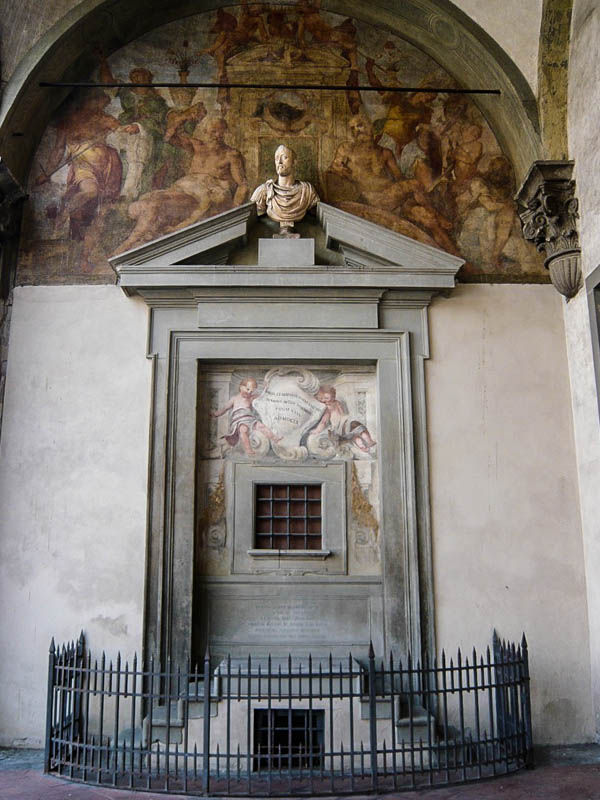
Every day, thousands of visitors cross Piazza Santissima Annunziata, pausing to admire the elegant arches of the Ospedale degli Innocenti without realizing the remarkable story behind it. Ospedale degli Innocenti translates to the Hospital of the Innocence. Designed by Filippo Brunelleschi in 1419, the building is widely regarded as one of the first masterpieces of Renaissance architecture, introducing the harmonious proportions, classical columns, and graceful arcades that would come to define the Renaissance throughout Europe. Yet its true significance lies not in its architecture alone. Founded as a home for abandoned children, the Ospedale degli Innocenti became one of the first institutions in Europe dedicated to their care. Beneath the loggia was a small opening known as the "foundling wheel," a revolving wooden hatch where desperate mothers could anonymously leave infants they could not support. After placing the child inside, the wheel was turned and a bell was rung to alert the caregivers within. If you look closely at the distinctive blue terracotta roundels set between the arches of the loggia.

Designed by Andrea della Robbia in the 15th century, these medallions depict swaddled infants and serve as a poignant reminder of the building's original purpose as a refuge for abandoned children. For centuries, countless children passed through these doors, making the Innocenti not only an architectural landmark but also a powerful symbol of Florence's commitment to compassion and social welfare.
Florence rewards those who look beyond its most famous landmarks. While icons like the Duomo, Ponte Vecchio, and Palazzo Vecchio deserve their place on every visitor's itinerary, some of the city's most fascinating architectural treasures are often hiding in plain sight. Whether it is the lavish splendor of the Medici Chapels, the perfect Renaissance proportions of San Lorenzo, the imposing grandeur of Palazzo Pitti, or the remarkable story behind the Ospedale degli Innocenti, these lesser-known sites offer a deeper understanding of Florence's history, art, and culture. By venturing beyond the crowded tourist hotspots, you will not only discover some of the city's greatest architectural masterpieces, but also experience the Florence that many visitors never see.
Ready to start exploring Florence and experiencing The Good Life? Connect with our full-time, knowledgable, and experienced team of Travel Specialists today!


Comments